
Introduction
Cold chain logistics places unique demands on packaging. Seafood, frozen foods, meat, dairy products, and fresh produce are often exposed to melting ice, condensation, fluctuating humidity, and sub-zero temperatures during transportation. Under these conditions, packaging must do more than simply hold products—it must maintain structural integrity throughout storage, handling, and distribution.
For decades, the corrugated paper box has been the standard packaging solution for shipping food products because it is lightweight, economical, and widely recyclable. However, its performance can decline when exposed to moisture for extended periods. As global food exporters seek more durable packaging for cold chain distribution, the stone paper corrugated box has emerged as an alternative designed to improve water resistance and durability.
This article compares stone paper corrugated boxes and corrugated paper boxes based on material composition, cold chain performance, sustainability, durability, and cost. Rather than promoting one material as universally superior, the goal is to help packaging buyers understand which solution best fits their logistics requirements.
What Is a Stone Paper Corrugated Box?
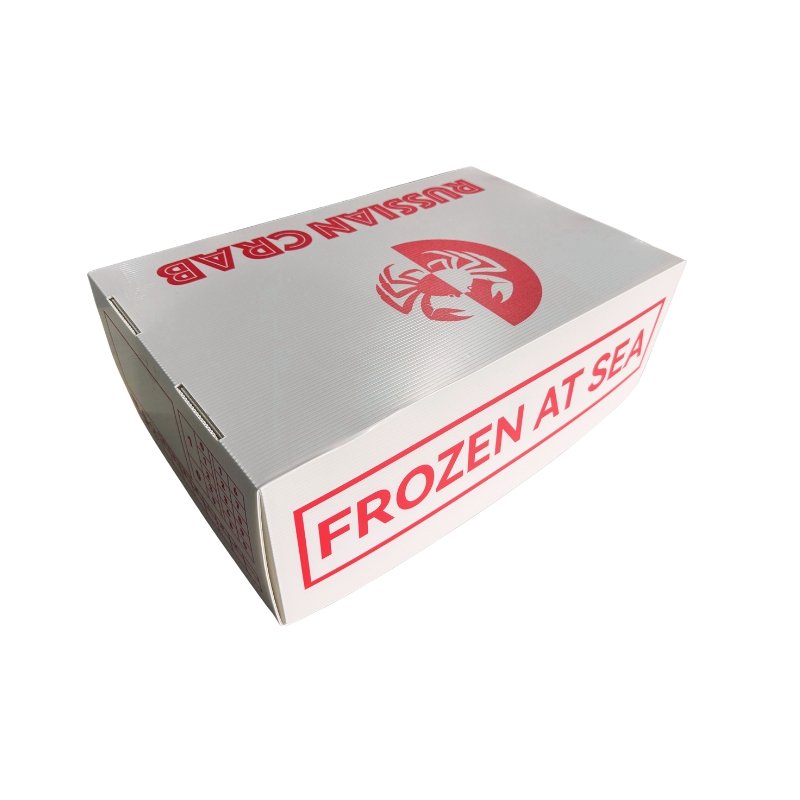
A stone paper corrugated box is a corrugated packaging solution manufactured from mineral-filled sheets instead of conventional wood-pulp paper. Depending on the manufacturer, the material typically contains a high percentage of calcium carbonate (CaCO₃) combined with a recyclable polymer binder such as high-density polyethylene (HDPE) or polypropylene (PP).
Unlike traditional paperboard, stone paper does not rely on wood fibers as its primary raw material. The finished sheets are converted into corrugated structures using fluted cores similar to conventional corrugated packaging, allowing the boxes to maintain rigidity while improving moisture resistance.
Typical applications include:
- Seafood export packaging
- Frozen food packaging
- Fresh produce packaging
- Cold chain logistics
- Moisture-sensitive industrial products
One of the most noticeable characteristics of a stone paper corrugated box is its resistance to water absorption. Since the surface contains little or no cellulose fiber, liquid water does not penetrate the material in the same way it does with conventional paper packaging.
What Is a Corrugated Paper Box?
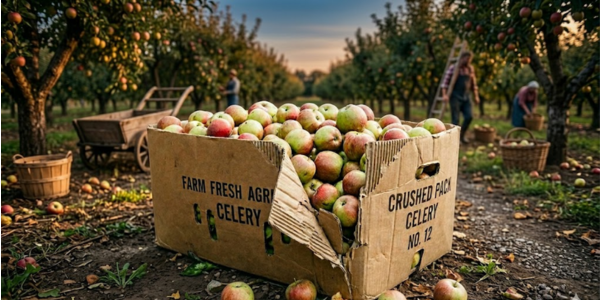
A corrugated paper box (also called a corrugated cardboard box) is manufactured from paper-based linerboard and a fluted corrugated medium bonded together with starch-based adhesive.
Its layered structure generally includes:
- Outer liner
- Corrugated medium (fluting)
- Inner liner
This design provides excellent strength-to-weight performance, making corrugated paper boxes one of the world’s most widely used transport packaging materials.
Common industries include:
- Consumer goods
- E-commerce
- Electronics
- Food packaging
- Agricultural products
- Industrial shipping
Because corrugated paper is primarily produced from virgin or recycled wood fibers, it is compatible with well-established paper recycling systems in many countries.
Stone Paper Corrugated Box vs Corrugated Paper Box: Material Comparison
Choosing the right packaging begins with understanding the materials behind each product.
| Feature | Stone Paper Corrugated Box | Corrugated Paper Box |
|---|---|---|
| Primary Material | Calcium carbonate + recyclable polymer | Wood pulp fiber |
| Waterproof | Excellent | Limited |
| Moisture Absorption | Very low | Relatively high |
| Surface Smoothness | Smooth | Slightly textured |
| Tear Resistance | High | Moderate |
| Printing Quality | High-definition printing surface | Good |
| Typical Recycling Route | Plastic/mineral recycling (where available) | Paper recycling |
| Typical Application | Cold chain & wet environments | General transportation |
Although both products are recyclable under appropriate waste management systems, they enter different recycling streams. Buyers should verify local recycling infrastructure before selecting either material.
Performance in Cold Chain Packaging
Cold chain transportation presents several challenges that conventional packaging may encounter:
- Condensation inside refrigerated trucks
- Meltwater from ice-packed seafood
- High humidity in cold storage
- Frequent loading and unloading
- Long-distance international shipping
These conditions can gradually reduce the mechanical performance of fiber-based packaging materials.
A stone paper corrugated box is designed to minimize water absorption, helping maintain its structural properties even when exposed to moisture for extended periods. This makes it particularly suitable for applications where direct contact with water or melting ice is common.
By comparison, a corrugated paper box performs well in dry logistics environments but may experience reduced compression strength after absorbing moisture. Industry research has shown that the compression performance of corrugated fiberboard can decrease significantly as moisture content increases, which is why humidity control is an important factor in warehouse management and transport planning.
For exporters shipping seafood, shellfish, salmon, shrimp, or frozen meat, maintaining packaging strength throughout the journey can help reduce product damage, improve pallet stability, and minimize handling risks.
Moisture Resistance: Why It Matters
Water is one of the biggest challenges for corrugated packaging.
In seafood exports, boxes are often packed with crushed ice or gel ice packs. As the ice melts, moisture can gradually penetrate conventional paper packaging, softening the paper fibers and reducing stacking strength.
A stone paper corrugated box addresses this challenge by using a mineral-based surface that resists water penetration. Instead of absorbing moisture, water remains on the surface and can typically be wiped away.
This difference becomes particularly valuable in:
- Fresh fish transportation
- Frozen seafood exports
- Meat processing facilities
- Fruit packing houses
- Cold storage warehouses
It is important to note, however, that moisture resistance does not make packaging indestructible. Packaging performance also depends on box design, board thickness, stacking configuration, and overall logistics conditions. Therefore, businesses should evaluate packaging systems as a whole rather than focusing on material alone.
Compression Strength and Durability
Compression strength is essential for maintaining pallet stability during transportation.
Boxes used in export logistics may be stacked several layers high inside containers, refrigerated warehouses, or distribution centers. If lower boxes lose strength due to moisture, the entire pallet can become unstable.
Stone paper corrugated boxes are often selected for wet logistics because their resistance to water helps preserve structural performance under humid conditions. By contrast, conventional corrugated paper boxes generally perform best when kept dry.
For cold chain applications, packaging buyers should consider:
- Static compression strength
- Wet compression performance
- Drop resistance
- Stacking duration
- Transportation distance
- Storage temperature
Selecting packaging based solely on dry-condition performance may not accurately reflect real-world logistics environments.
Sustainability Comparison
Sustainability has become an important purchasing criterion for packaging buyers, especially in food exports where environmental regulations and corporate ESG goals are becoming more common.
Both stone paper corrugated boxes and corrugated paper boxes offer environmental advantages, but they achieve them in different ways.
Traditional corrugated paper boxes are primarily manufactured from virgin or recycled wood fibers and benefit from one of the world’s most mature recycling systems. According to the American Forest & Paper Association (AF&PA), corrugated containers consistently achieve high recovery and recycling rates in North America.
Stone paper corrugated boxes, by comparison, replace most wood fibers with finely ground calcium carbonate combined with a recyclable polymer binder. This reduces dependence on virgin wood pulp. However, because the material contains polymer, recycling typically follows plastic-based recycling systems rather than conventional paper recycling. Availability varies by country and region.
When evaluating sustainability, packaging buyers should consider several factors:
- Availability of local recycling infrastructure
- Expected number of reuse cycles
- Transportation efficiency
- Packaging waste reduction
- Product damage reduction during shipping
Rather than asking which material is “more sustainable,” it is often more useful to ask which packaging system delivers the lowest overall environmental impact throughout its intended service life.
Cost Comparison: Purchase Price vs. Total Cost
Purchase price is only one part of packaging economics.
In many export operations, the total cost of ownership (TCO) is more important than the initial box price.
A conventional corrugated paper box usually has a lower unit cost, making it an excellent choice for dry products and standard domestic logistics.
A stone paper corrugated box may have a higher purchase price, but businesses sometimes offset this difference through:
- Reduced packaging failures
- Lower product damage rates
- Better pallet stability
- Fewer customer complaints
- Improved performance in wet logistics environments
For seafood exporters shipping products packed with ice, preventing one damaged shipment may represent a greater financial benefit than the difference in packaging cost.
Therefore, purchasing decisions should be based on overall logistics performance rather than unit price alone.
Best Applications
Different industries have different packaging requirements.
| Industry | Recommended Packaging |
|---|---|
| Seafood exports | Stone paper corrugated box |
| Frozen food | Stone paper corrugated box |
| Fresh produce with high humidity | Stone paper corrugated box |
| Dry food | Corrugated paper box |
| Consumer goods | Corrugated paper box |
| E-commerce | Corrugated paper box |
| Electronics | Corrugated paper box |
| Moisture-sensitive industrial products | Stone paper corrugated box |
Neither solution replaces the other completely. Instead, each performs best under specific logistics conditions.
Which Packaging Should You Choose?
The best choice depends on your application rather than the material itself.
Choose a corrugated paper box if you:
- Ship dry products
- Need the lowest packaging cost
- Operate within established paper recycling systems
- Do not expect prolonged exposure to water
Choose a stone paper corrugated box if you:
- Export seafood or frozen food
- Use ice or gel packs during transportation
- Require improved moisture resistance
- Need more consistent performance in refrigerated environments
- Want packaging designed for demanding cold chain logistics
Many exporters now evaluate packaging through field trials before making a purchasing decision. Testing both materials under actual shipping conditions provides the most reliable comparison.
Frequently Asked Questions
Is a stone paper corrugated box waterproof?
Stone paper packaging is designed to resist water penetration significantly better than conventional corrugated paper. However, overall packaging performance still depends on box design and manufacturing quality.
Can stone paper corrugated boxes replace corrugated paper boxes?
Not entirely. Corrugated paper remains an excellent solution for many dry logistics applications, while stone paper offers advantages in wet and refrigerated environments.
Which packaging is better for seafood exports?
For seafood transported with ice or under refrigerated conditions, a stone paper corrugated box generally provides better moisture resistance and helps maintain structural integrity throughout the cold chain.
Are stone paper corrugated boxes recyclable?
Yes. They are recyclable where suitable plastic or composite recycling systems exist. Buyers should confirm local recycling capabilities before implementation.
Are corrugated paper boxes recyclable?
Yes. Corrugated paper boxes are among the most widely recycled packaging materials worldwide and are supported by mature recycling infrastructure in many countries.
Which packaging offers better printing quality?
Both support high-quality printing, but the smoother surface of stone paper often produces sharper graphics and vibrant colors.
Which packaging is more durable?
Durability depends on the operating environment. In dry conditions, both perform well. In wet environments, stone paper generally maintains its mechanical properties more effectively because it absorbs very little moisture.
Is stone paper packaging suitable for cold chain logistics?
Yes. Its moisture resistance makes it well suited for seafood, frozen foods, meat, and other products transported in refrigerated supply chains.
Conclusion
Both stone paper corrugated boxes and corrugated paper boxes play valuable roles in modern packaging.
Traditional corrugated paper continues to be an economical and highly recyclable choice for dry logistics, retail distribution, and e-commerce.
For cold chain applications where moisture, condensation, and melting ice are unavoidable, a stone paper corrugated box offers clear advantages in water resistance and durability. These characteristics can help exporters reduce packaging failures, improve pallet stability, and better protect temperature-sensitive products throughout transportation.
Ultimately, the right packaging should be selected based on the product being shipped, the logistics environment, sustainability objectives, and the total cost of ownership—not simply the initial purchase price.
