
Choosing the right packaging material is no longer just about cost.
For industries such as seafood export, fresh produce, frozen food, and cold chain logistics, packaging directly affects product protection, storage efficiency, brand image, and transportation performance.
Two common options in the market today are stone paper boxes and traditional corrugated paper boxes.
At first glance, both may look similar as box packaging solutions. But when it comes to moisture resistance, cold storage, durability, and sustainability, their performance can be very different.
So which one is better for your business?
Let’s compare them from a practical packaging perspective.
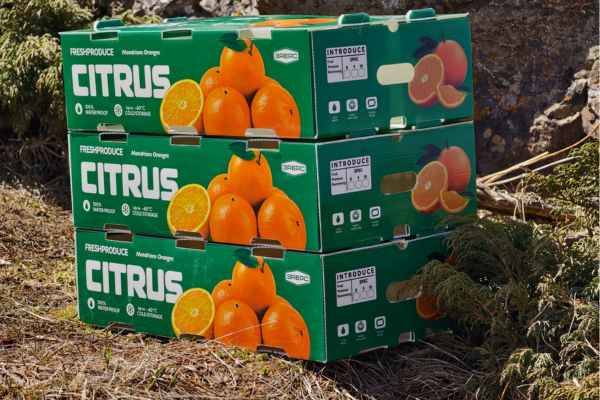
What is a Stone Paper Box?
A stone paper box is made from stone paper material, which is primarily composed of:
- 65%–80% calcium carbonate
- 20%–35% resin materials such as PE or PP
Instead of relying on traditional wood pulp, stone paper uses mineral powder combined with polymer binders to create a durable, printable, and water-resistant material.
Stone paper can then be processed into packaging formats such as:
- folding cartons
- corrugated-style boxes
- insulated transport boxes
This makes it increasingly popular in packaging industries that require moisture resistance and cold chain durability.
What is a Corrugated Paper Box?
A traditional corrugated paper box is made from paperboard layers:
- outer linerboard
- inner linerboard
- fluted corrugated medium
This layered structure gives corrugated packaging its compression strength and lightweight properties.
Corrugated boxes are widely used in:
- e-commerce packaging
- dry goods transportation
- retail logistics
They are cost-effective and recyclable, making them a long-established packaging standard.
However, their performance changes significantly when exposed to water, humidity, and cold storage.
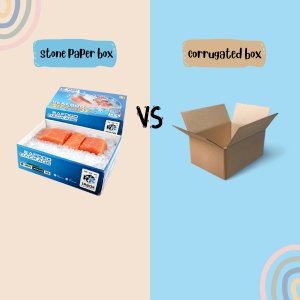
Stone Paper Box vs Corrugated Paper Box: Key Comparison
1. Waterproof Performance
Stone Paper Box
Stone paper is naturally water-resistant.
It does not absorb moisture like ordinary paper materials.
Advantages:
- maintains shape in wet environments
- resists condensation
- suitable for ice-packed products
This is especially important for:
- seafood packaging
- fresh produce logistics
- refrigerated transportation
Corrugated Paper Box
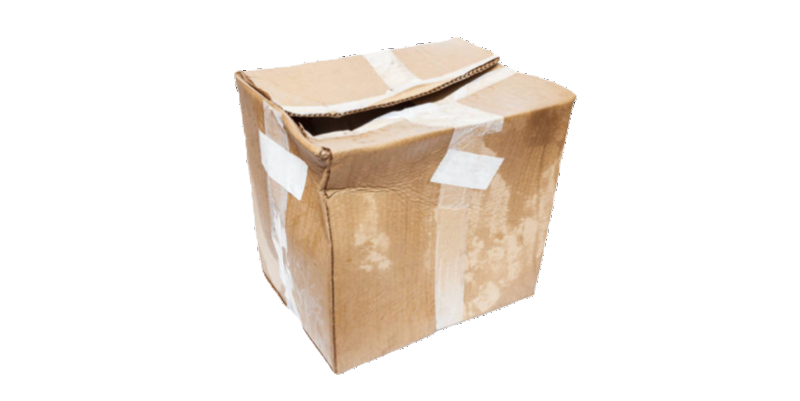
Traditional corrugated boxes absorb water easily.
When exposed to moisture, they may:
- soften
- deform
- lose stacking strength
For wet logistics conditions, additional coatings or liners are often required.
2. Cold Storage Performance
Stone Paper Box
Stone paper performs well in low temperatures.
It can tolerate environments up to -60°C cold storage without cracking or becoming brittle.
This makes it suitable for:
- frozen food packaging
- cold chain logistics
- seafood export
Corrugated Paper Box
Corrugated paper boxes can weaken under:
- freezing temperatures
- moisture exposure
- repeated cold-to-warm transitions
Structural performance is less stable in harsh cold chain environments.
3. Sustainability
Stone Paper Box
Stone paper reduces dependence on wood pulp.
Benefits include:
- reduced tree usage
- lower water consumption during manufacturing
- potential recyclability depending on material formulation
It is often positioned as an innovative sustainable packaging alternative.
Corrugated Paper Box
Corrugated packaging is widely recyclable and has an established recycling system globally.
Its advantages:
- mature recycling infrastructure
- biodegradable paper components
However, paper production typically requires:
- wood resources
- significant water consumption
4. Printing Quality
Stone Paper Box
Stone paper has a smooth and dense surface.
Advantages:
- vibrant color printing
- sharper graphics
- premium branding appearance
Suitable for:
- export packaging
- retail presentation
- custom branding
Corrugated Paper Box
Corrugated surfaces are generally rougher.
Printing quality can be limited by:
- texture
- absorbency
- surface inconsistency
5. Space Efficiency and Logistics
Stone Paper Box
Stone paper packaging can be designed with foldable structures.
Benefits:
- saves storage space
- reduces shipping volume
- improves container utilization
Corrugated Paper Box
Corrugated packaging can also be foldable, depending on design.
Both materials perform well here.
6. Cost
Stone Paper Box
Stone paper packaging may have a higher unit price depending on specification and customization.
However, savings may come from:
- reduced damage rates
- lower moisture-related losses
- improved logistics efficiency
Corrugated Paper Box
Corrugated boxes are generally lower-cost upfront.
They remain suitable for:
- dry goods
- low-risk transport
- budget-sensitive applications
Which Packaging is Better for Your Industry?
Choose Stone Paper Box if you need:
- waterproof packaging
- cold chain transportation
- frozen food logistics
- seafood export packaging
- premium printed packaging
Choose Corrugated Paper Box if you need:
- low-cost dry goods packaging
- general shipping cartons
- standard retail logistics
Final Verdict
There is no one-size-fits-all packaging solution.
But for industries dealing with moisture, refrigeration, and product freshness, stone paper boxes clearly outperform traditional corrugated paper boxes in several critical areas:
- waterproof performance
- low-temperature resistance
- printing quality
- cold chain durability
Traditional corrugated paper boxes still remain a practical solution for dry logistics and cost-sensitive packaging.
However, for exporters, seafood suppliers, fresh produce distributors, and cold chain businesses, stone paper offers a more specialized packaging solution.
In demanding logistics environments, packaging failure costs far more than packaging price.
That is why more businesses are evaluating stone paper as a next-generation packaging material.
