
Fresh fruits and vegetables are highly sensitive to moisture, temperature changes, and physical damage during transportation.
For exporters, wholesalers, and cold chain distributors, packaging is not just a box—it directly affects product freshness, shelf life, brand image, and logistics efficiency.
A high-quality fresh produce packaging box should solve four key challenges:
- moisture and water exposure
- low-temperature storage
- ventilation and freshness retention
- transport and storage efficiency
This is why more businesses are moving toward stone paper corrugated packaging as an alternative to traditional cardboard or foam solutions.
In this article, we explain how a professional fresh produce packaging box is made—from material selection to finished product.
1. Material Selection: Why Stone Paper Corrugated Material
The foundation of a high-performance produce box starts with the right material.
Traditional corrugated cardboard performs well in dry environments, but in produce logistics, moisture is unavoidable.
Fresh produce often creates:
- condensation
- water leakage
- humidity buildup
- cold storage moisture exposure
Ordinary cardboard can quickly soften, deform, or collapse.
This is why Stone Paper Corrugated Box materials are increasingly used in produce packaging.
Stone paper is made primarily from:
- calcium carbonate (65%–80%)
- resin materials such as PE or PP (20%–35%)
This creates a material with several advantages:
Eco-friendly production
Stone paper reduces dependence on wood pulp.
Benefits include:
- no tree cutting
- lower water consumption
- lower carbon footprint compared with conventional paper production
This makes it suitable for brands looking for more sustainable packaging options.
Waterproof performance
A Waterproof produce box must withstand wet logistics environments.
Stone paper is naturally moisture-resistant and does not absorb water like traditional cardboard.
This helps maintain packaging integrity during:
- refrigerated transportation
- ice-packed produce shipping
- wet warehouse handling
Low-temperature resistance
Fresh produce often enters refrigerated storage or cold chain transportation.
Stone paper packaging can tolerate temperatures up to -60°C cold storage without becoming brittle or structurally unstable.
This makes it highly suitable for Cold chain packaging solutions.
2. Structural Design: Foldable and Functional
Material alone is not enough.
A professional produce packaging box also requires optimized structural engineering.
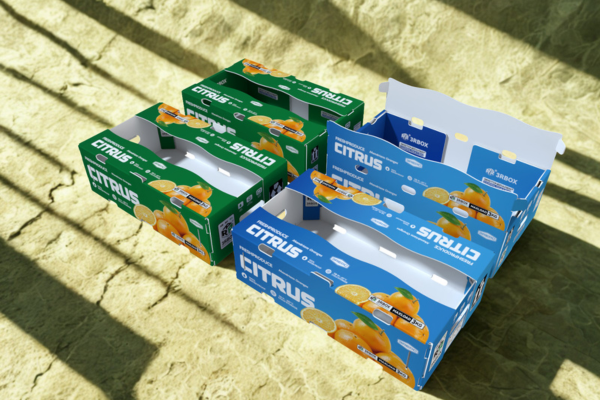
Foldable box structure
Modern produce exporters prioritize logistics efficiency.
A foldable structure helps:
- reduce warehouse footprint
- save shipping space
- improve container loading efficiency
Compared with rigid foam boxes, foldable packaging lowers transportation cost significantly.
This is especially useful for export businesses shipping large volumes.
Ventilation hole design
Fresh produce needs airflow.
Without ventilation, moisture and heat accumulate inside the box, accelerating spoilage.
A quality Custom fruit box should include properly positioned:
- side ventilation holes
- bottom airflow channels
- moisture release openings
This helps:
- improve air circulation
- reduce condensation
- extend produce freshness
Ventilation design should be adjusted depending on produce type.
For example:
- berries require higher airflow
- citrus fruits require moderate ventilation
- leafy vegetables require moisture balance

3. Printing: Branding and Shelf Appeal
Packaging is also part of product marketing.
A well-designed fruit box should communicate quality immediately.
Stone paper offers an excellent printing surface due to its:
- smooth texture
- high whiteness
- dense surface structure
This allows:
- high-resolution color printing
- sharp graphics
- strong logo visibility
Compared with rough cardboard surfaces, stone paper packaging produces a more premium appearance.
This is important for:
- retail packaging
- export presentation
- brand recognition
A professional fruit packaging box typically includes:
- brand logo
- product information
- origin details
- QR codes or traceability information
4. Die-Cutting and Box Conversion
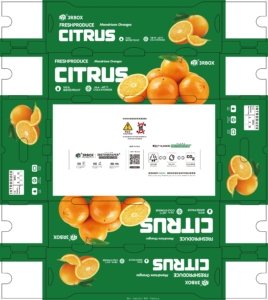
After printing, packaging sheets move to die-cutting and forming.
At this stage:
- box outlines are cut
- folding lines are created
- ventilation holes are punched
- locking structures are formed
Precision die-cutting is essential for:
- dimensional consistency
- structural stability
- easy assembly
For produce exporters, fast box assembly can improve packing efficiency significantly.
5. Final Quality Inspection
Before shipment, finished packaging boxes should undergo quality control checks.
Typical inspections include:
Waterproof testing
Verifies moisture resistance under wet conditions.
Compression testing
Ensures boxes can withstand stacking loads during logistics.
Low-temperature testing
Confirms material performance under refrigerated or frozen conditions.
Printing quality inspection
Checks color consistency, alignment, and logo clarity.
Why Stone Paper is Ideal for Fresh Produce Packaging
Compared with traditional packaging materials, stone paper offers a balanced combination of:
- sustainability
- moisture resistance
- cold storage performance
- premium print quality
- foldable logistics efficiency
This makes it an ideal material for businesses requiring reliable Cold chain packaging solutions.
Industries commonly using stone paper produce boxes include:
- fruit exporters
- vegetable distributors
- fresh produce wholesalers
- refrigerated logistics providers
Final Thoughts
A high-quality fresh produce packaging box is the result of multiple engineering decisions.
From raw material selection to ventilation structure, printing quality, and cold storage performance, every step affects the final packaging result.
For businesses operating in fresh produce export and cold chain logistics, choosing the right packaging material is no longer optional.
Stone paper corrugated packaging provides a practical solution by combining:
- waterproof protection
- low-temperature resistance
- sustainable production
- efficient logistics design
This is why more exporters are exploring stone paper as a next-generation produce packaging material.
