
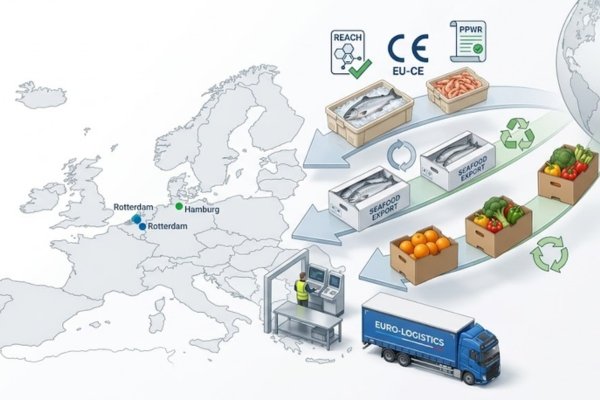
For seafood exporters and fresh produce suppliers, packaging decisions are becoming more complex. Waterproof performance, stacking strength and price remain important, but they are no longer the only factors buyers need to consider when products are placed on the European market.
The EU Packaging and Packaging Waste Regulation, commonly known as PPWR, is changing how packaging is designed, documented and evaluated. For companies exporting seafood, fish, shellfish, fruits or vegetables to Europe, packaging may now be assessed more closely for recyclability, substances of concern, recycled content, packaging reduction and other regulatory requirements.
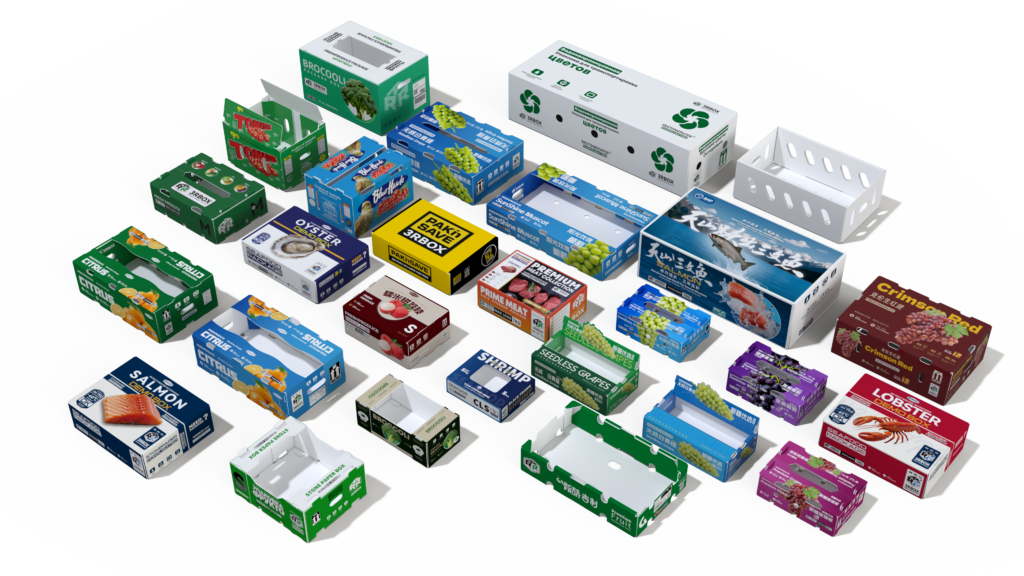
This is particularly relevant for suppliers using waterproof and durable packaging solutions such as a stone paper box, corrugated plastic box or PP box.
PPWR should not be understood as a simple ban on plastic or a rule that automatically approves one packaging material over another. Instead, it introduces a broader regulatory framework covering packaging placed on the EU market. For exporters, the practical question is increasingly not simply, “Is this box waterproof?” but also, “How is this packaging designed, what is it made of, and can the necessary compliance information be provided?”
What Is the EU PPWR?
The Packaging and Packaging Waste Regulation is officially Regulation (EU) 2025/40. It entered into force on 11 February 2025 and generally applies from 12 August 2026.
Unlike a directive, an EU regulation is directly applicable across EU Member States, although some requirements will apply according to different timelines and further implementing measures.
The PPWR establishes requirements for packaging and packaging waste placed on the EU market. Its overall direction includes reducing unnecessary packaging, improving recyclability, increasing circularity and addressing certain substances of concern.
According to the European Commission, the regulation aims to make packaging less wasteful, more recyclable and easier to manage within a circular economy.
For export businesses, this means packaging produced outside the EU can still be relevant to PPWR when it is placed on the EU market. Therefore, Chinese packaging manufacturers, seafood exporters, produce exporters, importers and European distributors may all need to pay closer attention to the packaging information available throughout the supply chain.
FAQ on Packaging and Packaging Waste Regulation (PPWR)>>
Why PPWR Matters for Seafood and Fresh Produce Packaging
Seafood and fresh produce create packaging challenges that are different from many dry consumer products.
Packaging may be exposed to:
- Water and condensation
- Ice and low temperatures
- Long-distance transportation
- Cold-chain handling
- Heavy stacking loads
- Repeated loading and unloading
- High-humidity environments
For these reasons, buyers often look for waterproof and durable alternatives to conventional paper-based packaging.
A stone paper box, corrugated plastic box or PP box may offer useful performance characteristics depending on its specific design and application. However, future packaging decisions for the European market should not focus on physical performance alone.
Buyers increasingly need to ask additional questions about:
- Material composition
- Food-contact suitability where applicable
- PFAS and other restricted substances
- Recyclability
- Recycled content requirements
- Packaging design
- Technical documentation
- Traceability
In practice, PPWR is pushing packaging procurement toward a more evidence-based process.
A supplier may say that a box is recyclable, waterproof or sustainable. However, buyers may increasingly require information that supports those claims.
PPWR Is Not Simply About Replacing Plastic
One common misunderstanding is that PPWR simply requires businesses to eliminate plastic packaging.
That is not the structure of the regulation.
The EU’s approach is focused on making packaging more circular. This includes requirements and future targets relating to recyclability, recycled content for plastic packaging and other sustainability measures.
Therefore, a corrugated plastic box or PP box is not automatically excluded from the European market simply because it contains plastic.
Instead, the specific packaging format must be assessed against the applicable requirements.
This is important for seafood and fresh produce packaging because waterproof performance remains a genuine logistics requirement. Packaging used for fish, shellfish or fresh produce may need to perform reliably under wet and cold conditions.
The future challenge is therefore to balance two objectives:
- Protecting the product during transport.
- Designing packaging with regulatory and circularity requirements in mind.
For manufacturers of a stone paper box, corrugated plastic box or PP box, material performance and compliance documentation will increasingly need to develop together.
Recyclability Will Become a Major Packaging Question
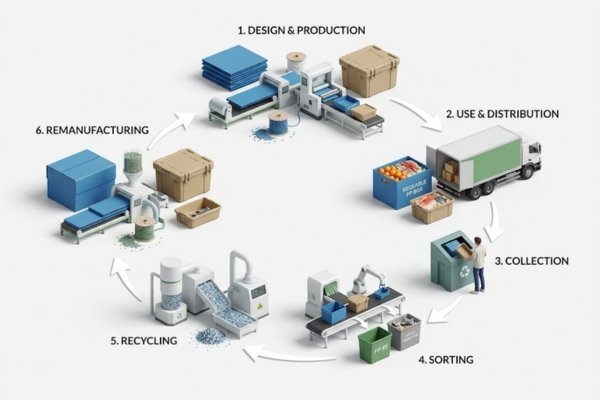
One of the most important themes of PPWR is packaging recyclability.
The European Commission states that all packaging should be recyclable by 2030 under the new framework, with further requirements developing over time.
However, recyclability should not be treated as a simple marketing label.
Whether a packaging product meets applicable recyclability requirements can depend on its material composition, design and the relevant rules for its packaging category. Multi-material structures, incompatible components, coatings, labels, inks and other elements may affect the overall assessment.
For example, a corrugated plastic box made primarily from a compatible material structure may present different recycling considerations from a highly complex multi-layer packaging system. A stone paper box may also require a clear assessment of its specific composition and the available end-of-life pathway rather than relying only on a general material description.
This means exporters should ask suppliers specific questions:
- What materials are used in the packaging?
- Is the packaging made from one material or several material layers?
- Are labels, inks or other components compatible with the intended recycling route?
- Can the supplier explain the packaging composition clearly?
- What recycling pathway is relevant to the specific market?
A recyclable claim should be supported by information rather than assumption.
Food-Contact Packaging and PFAS Requirements
For seafood and fresh food packaging, chemical compliance is another important issue.
PPWR includes restrictions on PFAS in food-contact packaging from 12 August 2026.
The regulation sets specific threshold values for PFAS, including limits of 25 ppb for any PFAS measured by targeted analysis, 250 ppb for the sum of targeted PFAS, subject to the conditions described in the regulation, and 50 ppm for PFAS including polymeric PFAS under the total PFAS provision.
This does not mean that every seafood packaging box requires the same testing approach. The appropriate compliance assessment depends on the product and its intended use.
However, companies supplying food packaging should understand an important principle: waterproof performance does not automatically demonstrate chemical compliance.
Historically, some water- and grease-resistant food-contact materials have involved fluorinated substances. The European Commission has identified food-contact materials as an area where PFAS may be relevant.
For a stone paper box, corrugated plastic box or PP box intended for seafood or other food applications, buyers may therefore ask for more information about:
- Raw materials
- Additives
- Coatings
- Printing inks
- Adhesives
- Food-contact status
- PFAS-related documentation or testing, where relevant
The correct documentation should always match the actual packaging structure and intended use.
Food Contact Compliance Goes Beyond PPWR
PPWR is not the only EU legislation relevant to food packaging.
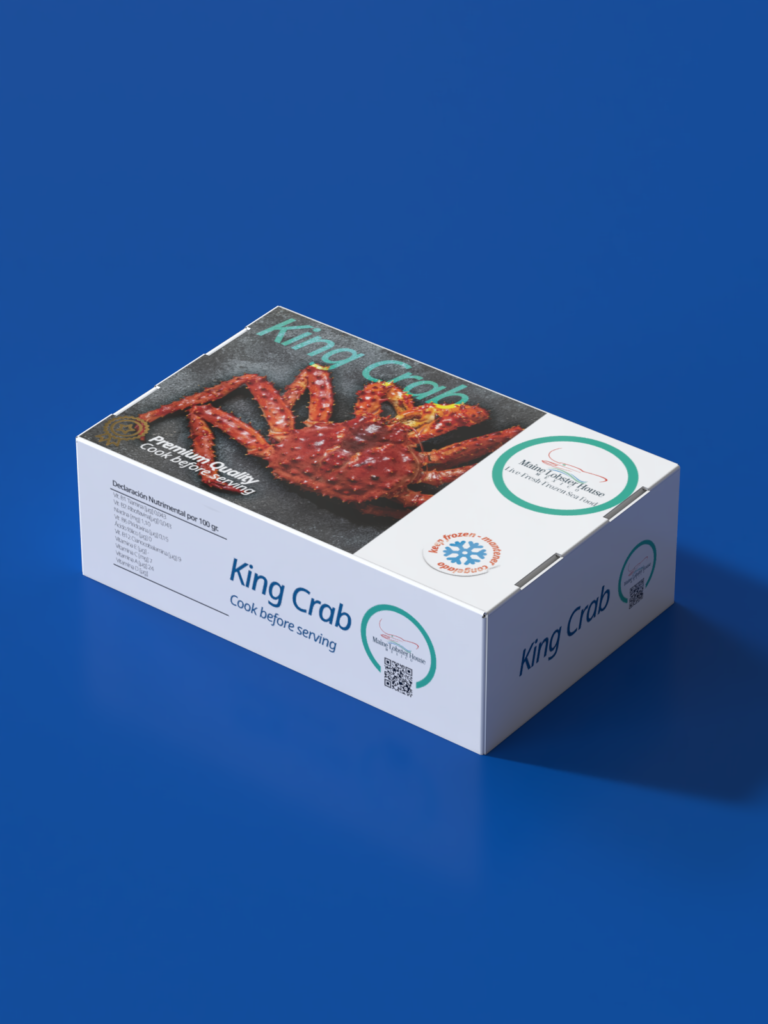
Food-contact materials placed on the EU market are also subject to broader EU food-contact requirements. The European Commission explains that food-contact materials must comply with Regulation (EC) No 1935/2004, together with other applicable rules depending on the material.
This is especially important for seafood packaging because the packaging may directly or indirectly contact food.
Therefore, a company should not assume that PPWR compliance automatically proves compliance with all food-contact requirements.
A practical compliance review may need to consider both:
- Packaging and packaging waste requirements
- Food-contact material requirements
For export buyers, this is an important distinction.
A packaging supplier that can explain both the packaging material and the relevant compliance documentation may be better positioned to support European importers and distributors.
Recycled Content Will Become More Important for Plastic Packaging
PPWR also introduces recycled-content requirements for certain categories of plastic packaging, with targets applying in stages.
The exact requirements depend on the type and category of packaging, including whether the packaging is food-contact packaging and whether specific exemptions or conditions apply.
For manufacturers of a PP box or corrugated plastic box, this means recycled content should become part of long-term product development.
However, the subject is more complex than simply adding recycled plastic to every packaging product.
For food-contact applications, recycled materials may be subject to additional requirements. Material safety, intended use and applicable food-contact legislation remain important.
Therefore, buyers should avoid asking only:
Does this packaging contain recycled material?
A more useful question is:
What recycled content requirement, if any, applies to this specific packaging category, and what documentation supports the material used?
This approach is more accurate and more useful for PPWR planning.
Packaging Reduction Does Not Mean Sacrificing Product Protection
Another important objective of PPWR is reducing unnecessary packaging.
For exporters, this does not necessarily mean using the thinnest or lightest box possible.
Seafood and fresh produce are sensitive products. Packaging must still protect the goods during transportation, storage and handling.
A box that uses less material but fails during shipping may create additional waste, product loss and operational costs.
The better approach is to optimise the packaging system.
This may involve reviewing:
- Box dimensions
- Board thickness
- Load-bearing requirements
- Stack height
- Product weight
- Pallet dimensions
- Container utilisation
- Reuse potential
- Product damage rates
For example, a durable corrugated plastic box or PP box may support repeated use in certain logistics systems. A waterproof stone paper box may be designed for applications where resistance to moisture is important.
The appropriate solution depends on the product, distribution model and packaging lifecycle.
PPWR is therefore likely to encourage companies to think beyond the purchase price of one box and consider the efficiency of the entire packaging system.
What Should Buyers Ask Packaging Suppliers?
Seafood exporters and fresh produce suppliers preparing for the European market can start by asking practical questions.
1. What Is the Exact Material Composition?
General descriptions such as “plastic packaging” or “stone paper” may not provide enough information for a detailed compliance assessment.
Buyers should understand the main materials and relevant components used in the finished packaging.
2. Is the Packaging Intended for Food Contact?
If the box is designed to contact seafood, fresh produce or other food, the supplier should identify the relevant intended use.
3. What Documentation Is Available?
Depending on the product, useful documentation may include:
- Technical data sheets
- Material specifications
- Test reports
- Declarations related to food-contact requirements
- PFAS-related information
- Traceability information
4. How Is Recyclability Evaluated?
A supplier should avoid making unsupported recyclable claims.
The assessment should consider the actual packaging design and applicable requirements.
5. Does the Packaging Need to Meet Recycled Content Requirements?
For plastic packaging, this question will become increasingly relevant as PPWR requirements are phased in.
6. Is the Packaging Optimised for Its Logistics Application?
A seafood box should be designed around actual transport conditions rather than regulatory requirements in isolation.
Water exposure, cold-chain handling, stacking strength and container efficiency all remain relevant.
What PPWR Means for Stone Paper Box, Corrugated Plastic Box and PP Box Buyers
The biggest change is not that one packaging material will automatically replace another.
Instead, buyers will increasingly evaluate packaging through several connected questions:
Performance: Can the packaging protect seafood or fresh produce?
Material: What is the packaging made of?
Safety: Does the packaging meet applicable food-contact and chemical requirements?
Circularity: How is the packaging designed for recycling or reuse?
Documentation: Can the supplier provide reliable technical information?
For a stone paper box, corrugated plastic box or PP box, the future competitive advantage may depend on combining these factors.
A waterproof box alone is not enough.
A recyclable claim alone is not enough.
A low-cost price alone is not enough.
Export packaging for the European market increasingly needs a clear technical and regulatory story.
Preparing for PPWR: Start with Packaging Data
Companies do not need to redesign every packaging product immediately.
However, they should begin collecting accurate information about the packaging they currently use.
A practical starting point is to create a packaging information file covering:
- Packaging dimensions
- Packaging weight
- Material composition
- Components and additives
- Intended food-contact use
- Existing test reports
- Recycled content
- Reuse potential
- Recycling information
- Supplier and batch traceability
This information can help exporters identify potential gaps before customers or importers request documentation.
It can also help packaging manufacturers improve future product development.
For example, if a corrugated plastic box is being developed for seafood export, the manufacturer can consider waterproof performance, structural strength, material design and documentation requirements at the same time.
This is generally more efficient than trying to rebuild compliance information after the product has already entered production.
Final Thoughts
EU PPWR represents an important change for the packaging industry, but it should not be viewed only as a regulatory burden.
For seafood and fresh produce exporters, it is also changing how packaging quality is defined.
In the past, a buyer may have focused primarily on whether a box was waterproof, strong and competitively priced.
Today, the same buyer may also need to understand what the box is made of, whether it is suitable for food contact, how its recyclability is assessed and what documentation is available.
This creates opportunities for packaging manufacturers that can provide more than a physical product.
For suppliers of stone paper box, corrugated plastic box and PP box solutions, the strongest position will increasingly come from combining reliable packaging performance with transparent material information and appropriate compliance support.
The key message for exporters is simple: PPWR readiness should be considered as part of packaging development, not as an afterthought.
The earlier packaging buyers understand their material, design and documentation requirements, the easier it will be to prepare for the changing European packaging market.
FAQ: EU PPWR and Export Packaging
Does EU PPWR apply to packaging manufactured outside Europe?
PPWR applies to packaging placed on the EU market. Therefore, packaging manufactured outside the EU may still be relevant when it is used for products entering the European market.
Are PP boxes banned under PPWR?
No. PPWR is not a general ban on all plastic packaging. Plastic packaging is subject to requirements relating to issues such as recyclability and recycled content, depending on the packaging category and applicable provisions.
Is a corrugated plastic box automatically PPWR compliant?
No. Compliance depends on the specific packaging product, including its design, material composition, intended use and applicable requirements.
Are PFAS restricted in food-contact packaging under PPWR?
Yes. From 12 August 2026, PPWR establishes specific PFAS limits for food-contact packaging.
Can a stone paper box be used for seafood export to Europe?
Suitability depends on the specific box design, material composition, intended use and applicable EU requirements. Waterproof performance alone does not determine regulatory compliance.
What documents should packaging buyers request from suppliers?
Depending on the product, buyers may request technical data sheets, material specifications, food-contact documentation, test reports, PFAS-related information and traceability records.
