
Introduction
Seafood and fresh produce exporters face a packaging challenge that traditional corrugated cartons often struggle to solve: maintaining structural performance in wet, refrigerated, and high-humidity logistics environments.
Boxes used for seafood, vegetables, fruit, and frozen products are regularly exposed to:
- melting ice
- condensation
- low temperatures
- long-distance transportation
- stacking pressure during export
As a result, international buyers increasingly evaluate packaging materials not only by cost, but also by waterproof performance, compression strength, food-contact compliance, and cold-chain durability.
Among newer materials entering the export packaging market, stone paper packaging has gained attention because of its water resistance, reusable structure, and ability to maintain performance under humid conditions.
This article explains the main testing standards and evaluation methods used for stone paper packaging in seafood and fresh produce export applications.
What Is Stone Paper Packaging?
Stone paper packaging is typically manufactured using a combination of:
- calcium carbonate (CaCO₃)
- polymer-based binders such as HDPE
Unlike conventional fiber-based corrugated cartons, stone paper packaging absorbs very little moisture. This makes it suitable for export environments where water exposure is unavoidable.
Common applications include:
- seafood shipping boxes
- frozen food cartons
- vegetable export packaging
- fruit transportation boxes
- reusable cold-chain packaging
Why Testing Standards Matter in Export Packaging
Packaging failure during export transportation can create serious operational problems, including:
- product damage
- pallet collapse
- contamination risks
- increased logistics costs
- rejected shipments
Testing standards help exporters and importers verify whether packaging can perform consistently under real transportation conditions.
For seafood and fresh produce packaging, testing usually focuses on five key areas:
- water resistance
- compression strength
- low-temperature durability
- food safety compliance
- transportation stability
Water Resistance Testing Standards
Immersion Testing
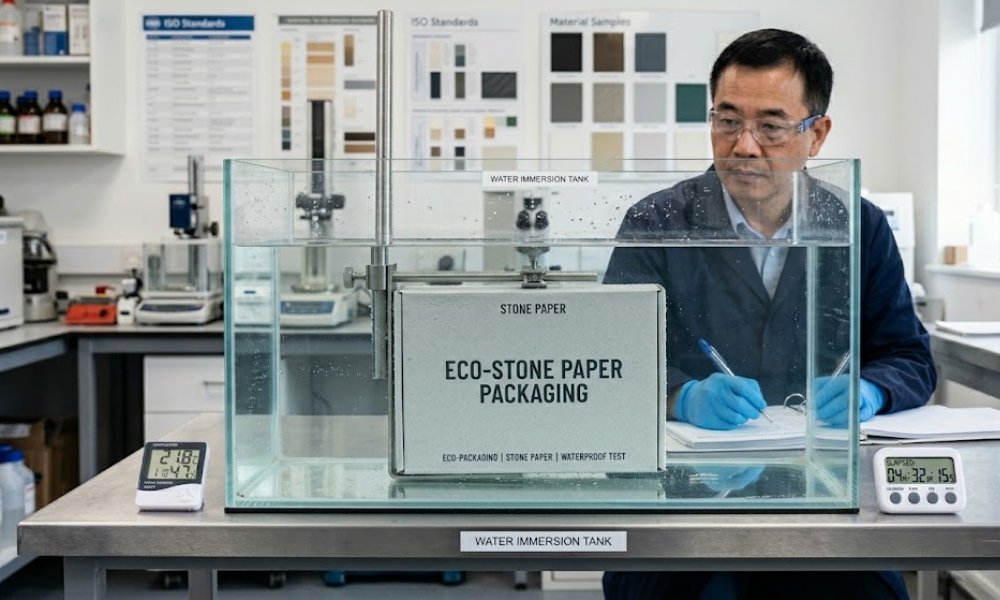
One of the most common methods for evaluating waterproof packaging is immersion testing.
In this procedure, packaging boxes are exposed to water for a controlled period to evaluate whether the structure weakens, separates, or collapses.
Typical evaluation criteria include:
- surface deformation
- edge softening
- adhesive separation
- structural integrity after drying
Because seafood packaging frequently comes into contact with crushed ice and condensation, immersion resistance is especially important for export applications.
Stone paper packaging generally performs well in immersion testing because the material itself absorbs minimal water compared with traditional paper-based corrugated board.
Humidity Resistance Testing
Fresh produce logistics often involve refrigerated storage with humidity levels above 90%.
Humidity resistance testing evaluates whether packaging can maintain:
- stacking strength
- dimensional stability
- folding performance
- print adhesion
This test is particularly relevant for:
- grape packaging boxes
- broccoli export cartons
- lychee boxes
- citrus packaging
Packaging that loses rigidity in humid environments may collapse during pallet transportation.
Compression Strength Testing
Box Compression Test (BCT)
Compression testing measures how much vertical load a packaging box can withstand before failure.
In export logistics, this directly affects:
- pallet stacking height
- warehouse storage safety
- container loading efficiency
Compression performance is influenced by several factors:
- material thickness
- GSM (grams per square meter)
- structural design
- moisture exposure
For seafood export cartons, maintaining compression strength under wet conditions is more important than dry-condition performance alone.
High-quality waterproof packaging materials should retain structural stability even after prolonged exposure to refrigeration and humidity.
Low-Temperature Performance Testing
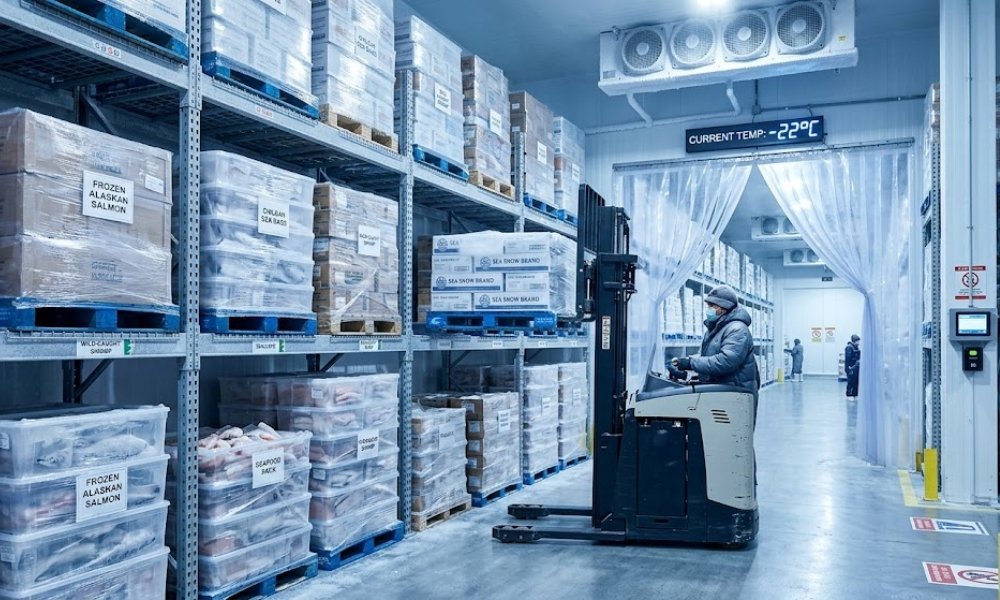
Seafood and frozen food logistics often operate at temperatures below freezing.
Cold Chain Durability Testing
Cold-chain testing evaluates whether packaging remains stable under conditions such as:
- 0–4°C refrigerated transport
- -18°C frozen storage
- repeated freeze-thaw cycles
Inspectors typically evaluate:
- cracking resistance
- fold durability
- corner stability
- compression retention after freezing
Some fiber-based cartons become brittle or lose strength after moisture exposure and freezing. Waterproof packaging materials are designed to reduce this risk.
Leak Resistance and Bottom Strength Testing
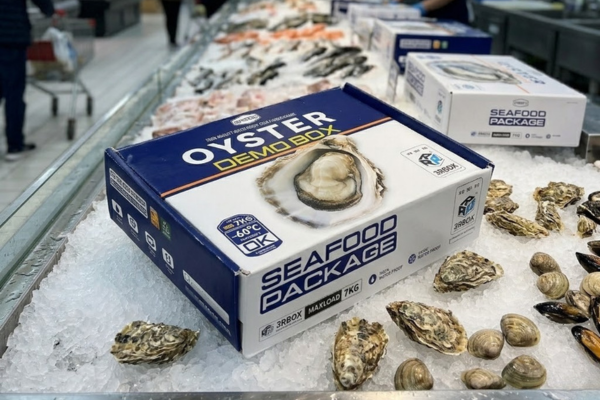
Seafood export packaging must also resist leakage caused by melted ice and liquid accumulation.
Bottom Load Testing
This test evaluates whether the bottom structure can support product weight under wet conditions.
Typical failure points include:
- bottom seam separation
- corner deformation
- softened material layers
Leak-resistant packaging is especially important for:
- tuna export boxes
- salmon transportation cartons
- shrimp packaging
- live seafood logistics
Food Safety and Compliance Standards
Packaging used for food export must comply with relevant food-contact regulations.
Common compliance requirements include:
Importers often request documentation before approving suppliers for export packaging programs.
Transportation Simulation Testing
Modern export packaging is frequently evaluated using transportation simulation testing.
ISTA Transit Testing
ISTA testing methods simulate:
- vibration during trucking
- pallet movement
- container stacking
- impact during handling
The purpose is to determine whether packaging can protect products throughout international transportation routes.
This type of testing is especially useful for reusable shipping packaging systems.

Why Stone Paper Packaging Is Increasingly Used in Cold Chain Export
Compared with conventional corrugated cartons, stone paper packaging offers several practical advantages for cold-chain export environments:
- low moisture absorption
- waterproof surface performance
- improved durability under humidity
- reusable structure
- resistance to cold storage conditions
These characteristics make it increasingly suitable for seafood and fresh produce logistics where packaging reliability directly affects product quality.
Conclusion
Testing standards play an essential role in evaluating packaging performance for seafood and fresh produce export.
For waterproof export packaging, important evaluation areas include:
- immersion resistance
- humidity durability
- compression strength
- cold-chain performance
- food safety compliance
- transportation simulation
As international logistics requirements continue to increase, buyers are placing greater emphasis on packaging materials that can maintain performance in wet and refrigerated environments.
Stone paper packaging has emerged as a practical solution for many export applications because it combines waterproof performance, structural durability, and reusable potential within cold-chain logistics systems.
