
The packaging industry is changing fast. Buyers today are no longer only looking for low-cost boxes—they also care about durability, moisture resistance, sustainability, and logistics efficiency.
For industries like seafood export, frozen food, fresh produce, and cold chain logistics, traditional packaging materials often create the same problems: water damage, box collapse, poor printing quality, and high storage costs.
This is where stone paper packaging is starting to gain attention.
Stone paper combines natural mineral resources with modern polymer technology to create a packaging material that is both practical and environmentally conscious.
But how does stone become packaging?
Let’s look at the process from raw material to finished packaging box.
What is Stone Paper?
Stone paper is an alternative packaging material made primarily from calcium carbonate (CaCO₃), a mineral widely found in limestone, marble, and other natural rocks.
Most stone paper formulations contain:
- 65%–80% calcium carbonate
- 20%–35% resin materials, such as PE (polyethylene), PP (polypropylene), or PVC
The stone is ground into ultra-fine powder, mixed with resin, heated, and processed into a smooth, paper-like sheet.
Unlike traditional paper, stone paper does not rely on wood pulp, which reduces dependence on trees and lowers water usage during manufacturing.
This makes it an attractive option for brands exploring more sustainable packaging materials.
How Stone Becomes Packaging Material
The production process of stone paper is different from conventional paper manufacturing.
1. Stone Grinding
Natural minerals such as limestone are crushed into fine calcium carbonate powder.
This powder creates the main structural body of the material.
2. Material Blending
The stone powder is blended with resin materials.
The resin acts as a binder, improving:
- flexibility
- strength
- processability
Different formulas can be used depending on the intended packaging application.
For example:
- more rigidity for corrugated boxes
- more flexibility for bags or liners
3. Sheet Extrusion
The blended material is heated and extruded into flat sheets.
These sheets are then stretched and surface-treated to create a printable, paper-like texture.
The final material is smooth, dense, and highly resistant to moisture.
4. Packaging Conversion
Stone paper sheets are converted into:
- folding cartons
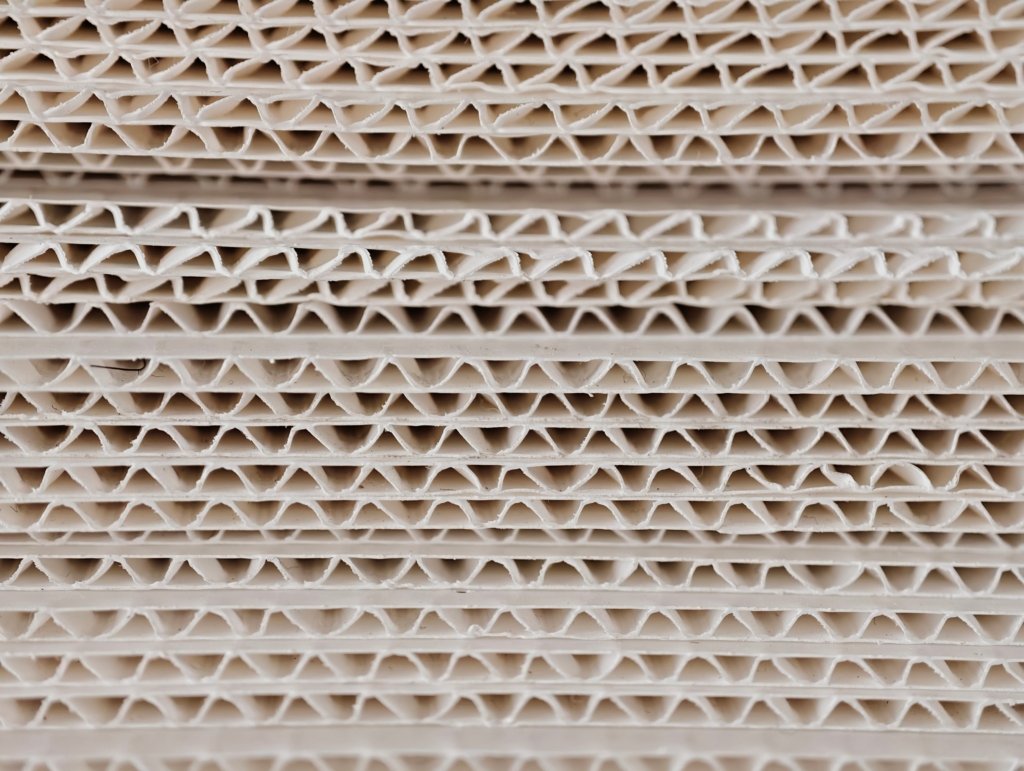
- corrugated boxes
- insulated packaging
- custom packaging solutions
This is where raw material becomes a finished packaging product ready for logistics and retail applications.
Why Stone Paper is Different from Traditional Packaging
Stone paper is not simply “paper made from stone.” Its performance characteristics make it especially useful for demanding logistics environments.
1. Waterproof Performance
Traditional cardboard absorbs water easily.
In seafood or frozen food logistics, melted ice and condensation often weaken ordinary boxes.
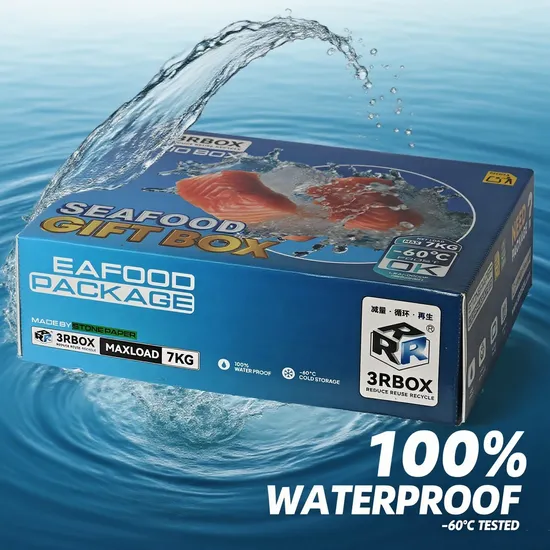
Stone paper packaging is naturally water-resistant, helping maintain box integrity even in wet environments.
This is a major advantage for:
- seafood exporters
- cold chain warehouses
- frozen food distributors
2. Freezer Resistance
Low temperatures can damage conventional packaging materials.
Stone paper packaging performs well under freezing conditions and can tolerate temperatures as low as -60°C.
This makes it suitable for:
- frozen seafood
- meat products
- cold storage transportation
3. Better Printing Quality
Stone paper has a smooth and dense surface, which allows:
- sharper printing
- brighter colors
- premium packaging appearance
For export businesses, packaging is also part of brand presentation.
A strong-looking box can improve buyer perception.
4. Space-Saving Logistics
Stone paper packaging boxes can be designed as foldable structures.
Compared with bulky foam boxes, foldable packaging helps:
- reduce warehouse space
- improve container loading efficiency
- lower shipping costs
This is highly valuable for exporters shipping globally.
Why Stone Paper is Growing in Sustainable Packaging
Packaging buyers today face two major pressures:
Environmental expectations
Many markets are tightening sustainability requirements.
Brands increasingly need packaging solutions that reduce environmental impact.
Logistics performance
Packaging must also survive real-world transportation conditions.
Buyers do not want to choose between sustainability and performance.
Stone paper helps bridge this gap by offering:
- reduced wood pulp dependence
- lower water usage in production
- recyclable potential depending on material composition
- stronger moisture resistance than ordinary paper packaging
This combination is why more companies are evaluating stone paper as a next-generation packaging material.
Common Applications of Stone Paper Packaging
Stone paper packaging is increasingly used in:
Seafood packaging
- fish
- shrimp
- shellfish
Cold chain packaging
- frozen food
- meat
- temperature-sensitive logistics

Fresh produce packaging
- fruits
- vegetables
- export produce
Retail and branded packaging
- premium boxes
- custom printed packaging
Final Thoughts
Stone paper packaging is more than a packaging trend.
It is a practical material innovation designed for businesses that need:
- waterproof performance
- freezer resistance
- strong printing quality
- better logistics efficiency
From raw stone to finished packaging box, stone paper is helping packaging move toward a more durable and sustainable future.
For industries such as seafood, frozen food, and fresh produce, this is not just an environmental story—it is a packaging performance upgrade.
