
PP corrugated board has become a practical choice for manufacturers, distributors, and packaging companies seeking lightweight, moisture-resistant, reusable packaging solutions. Made primarily from polypropylene (PP), this structured plastic sheet combines two flat outer surfaces with an internal fluted structure, providing useful stiffness without the weight of a solid plastic panel.
From protective packaging and industrial containers to seafood boxes and fresh produce transportation, PP corrugated board offers a versatile alternative to traditional packaging materials in applications where moisture resistance, durability, and repeated use are important.
But what exactly is PP corrugated board? What specifications should buyers consider? How can businesses choose the right material for their packaging needs?
This guide explains its structure, properties, common applications, technical specifications, and key purchasing considerations.
1. What Is PP Corrugated Board?
PP corrugated board, also known as polypropylene corrugated sheet, corrugated plastic sheet, twin-wall polypropylene sheet, or PP hollow board, is a lightweight plastic panel manufactured primarily from polypropylene resin.
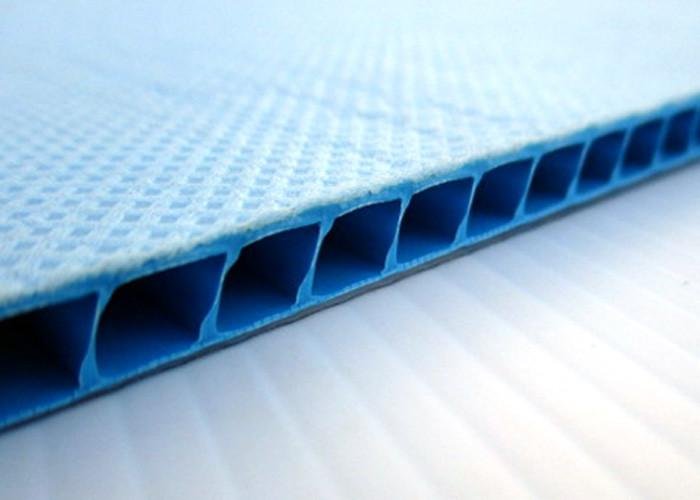
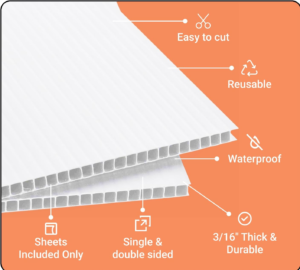
Unlike solid plastic sheets, it has a hollow internal structure. Two flat outer layers are connected by parallel vertical ribs, creating a series of channels or flutes between the surfaces.
This design provides structural stiffness while keeping the material relatively lightweight.
The manufacturing process generally involves extrusion. Molten polypropylene is formed through a specially designed die to create the outer surfaces and internal ribs in one continuous sheet structure. The resulting board can then be cut, printed, creased, die-cut, folded or fabricated into different products.
Common characteristics include:
- Lightweight construction
- Moisture and water resistance
- Good impact resistance
- Resistance to many common chemicals
- Easy cutting and fabrication
- Reusability in suitable applications
- Potential for recycling through appropriate PP recycling systems
PP corrugated board is widely used in packaging, advertising, agriculture, logistics, and industrial applications.
2. Structure and Types of PP Corrugated Board
Understanding the internal structure is important when selecting PP corrugated board. Different structures and material configurations offer different levels of stiffness, flexibility and load-bearing performance.
2.1 Twin-Wall Corrugated PP Sheet
Twin-wall PP sheet is one of the most common forms of corrugated polypropylene board.
It consists of two outer layers connected by internal ribs. The hollow channels reduce material consumption compared with a solid panel of similar external dimensions.
Typical applications include:
- Packaging boxes
- Protective layer pads
- Returnable containers
- Advertising boards
- Agricultural packaging
- Industrial protective panels
2.2 Structured-Core and Honeycomb PP Panels
Some polypropylene panels use a different internal construction, such as a honeycomb or structured-core design.
These panels generally contain outer skins surrounding a cellular internal core. Depending on their design, they can provide additional stiffness and load distribution for specific industrial packaging applications.
They should not be confused with conventional twin-wall PP sheets because their structures and manufacturing methods are different.
2.3 Thickness, Weight and Flute Configuration
Thickness and grammage are two important specifications when purchasing PP corrugated board.
Thickness is generally measured in millimeters (mm), while grammage refers to the material weight per square meter (g/m²).
Common commercial specifications vary by manufacturer and application. For example, technical product ranges in the market include thicknesses from approximately 2 mm to 10 mm and grammages from several hundred to several thousand grams per square meter.
The relationship between thickness and weight is not fixed. Two boards with the same thickness may have different weights because of differences in resin density, wall thickness, flute geometry, and formulation.
Buyers should therefore confirm both thickness and grammage instead of selecting a board based on thickness alone.
Other specifications to consider include:
- Flute spacing and direction
- Outer skin thickness
- Sheet dimensions
- Colour
- Surface treatment
- Virgin or recycled material content
- Special performance additives
A technical datasheet should be requested before confirming a bulk order.
3. Key Benefits of PP Corrugated Board
PP corrugated board offers several functional advantages for packaging and transportation.
3.1 Lightweight but Structurally Rigid
The hollow-core structure provides stiffness without requiring the same amount of material as a solid plastic sheet.
This makes PP corrugated board suitable for packaging products that need a balance between low packaging weight and structural support.
However, actual compression and stacking performance depend on sheet thickness, grammage, flute geometry, box design, and manufacturing quality.
3.2 Moisture and Water Resistance
Polypropylene has low water absorption, making PP corrugated board suitable for applications exposed to moisture, splashes, and humid environments.
Unlike conventional paper-based corrugated board, the polypropylene material does not readily absorb water and lose its structural properties through moisture exposure.
This is particularly useful for seafood distribution, fresh produce transportation, and cold-chain logistics.
For finished boxes, buyers should also evaluate joints, closures, seams, and printing treatments because the overall water resistance depends on the complete box construction, not only the sheet material.
3.3 Durability and Reusability
PP corrugated board can withstand repeated handling in suitable packaging applications.
It can be converted into reusable boxes, dividers, protective sheets, and returnable transport packaging.
For businesses operating closed-loop logistics systems, reusable PP packaging can help reduce the need for repeated purchases of disposable packaging.
The actual service life depends on loading conditions, handling frequency, cleaning procedures, temperature, and exposure to sunlight.
3.4 Chemical Resistance
Polypropylene generally offers good resistance to many acids, alkalis and common chemicals.
This property makes it useful in various industrial and agricultural environments.
Nevertheless, chemical compatibility depends on the specific chemical, concentration, temperature, and exposure time. Testing should be conducted before using the board in demanding chemical environments.
3.5 Easy Processing and Customization
PP corrugated board can be processed using different converting methods, including:
- Die cutting
- Creasing and folding
- Slitting
- Punching
- Screen printing
- Flexographic printing
- UV printing
- Welding and assembly
These processes allow manufacturers to produce packaging in different dimensions, shapes, colours, and printed designs.
Custom printing can also help packaging companies display product information, handling instructions, brand logos, and identification marks.
4. Common Applications of PP Corrugated Board
The versatility of PP corrugated board makes it suitable for different industries. Its application depends on the required mechanical performance, environmental conditions and packaging design.
4.1 Seafood Packaging Boxes
Seafood packaging is one of the applications where moisture resistance is particularly important.
Fish, shrimp, crab and other seafood products are frequently transported under refrigerated or frozen conditions. Packaging may be exposed to melting ice, condensation, water and repeated handling.
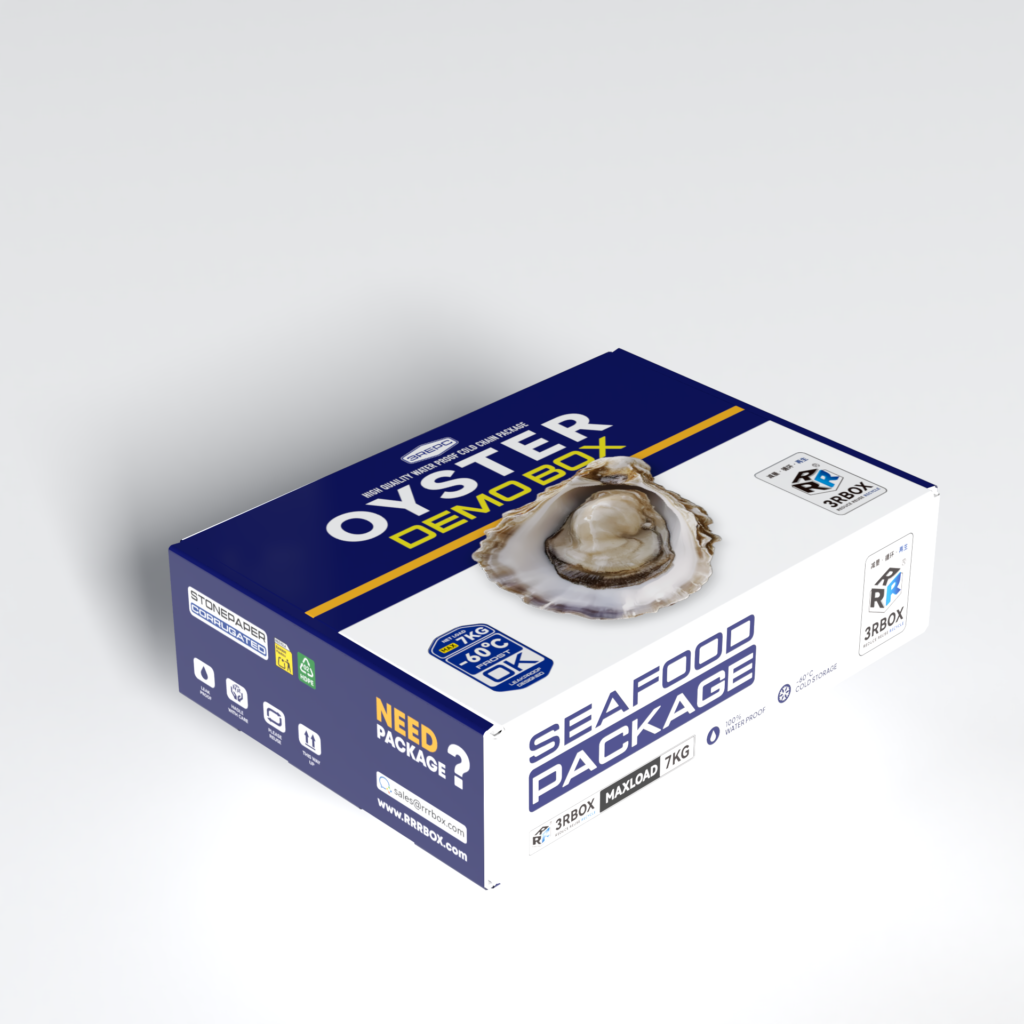
PP corrugated board can be converted into seafood packaging boxes designed for these transportation conditions.F
Potential benefits include:
- Resistance to moisture exposure
- Lightweight transportation packaging
- Custom box dimensions
- Printed branding and product information
- Reusable packaging options
- Compatibility with suitable cold-chain packaging designs
For seafood buyers, the complete box should be evaluated under actual operating conditions. Important factors include payload weight, ice quantity, stacking height, temperature, transportation duration, and handling conditions.
Food-contact requirements must also be considered if the packaging directly contacts seafood. The specific resin, additives, colourants, printing inks and other components need to comply with the applicable regulations and intended conditions of use.
4.2 Fruit and Vegetable Packaging
Fresh produce packaging must protect products during sorting, storage, distribution and transportation.
Different fruits and vegetables have different packaging requirements. For example, grapes, citrus fruits, tomatoes, avocados and blueberries may require different box dimensions, ventilation designs and internal protection.
PP corrugated board can be converted into customized fruit and vegetable packaging boxes with:
- Ventilation holes
- Customized dimensions
- Printed product information
- Reinforced structures where required
- Foldable or stackable designs
Ventilation openings can help support airflow during transportation and storage. Their size and position should be designed according to the product, cooling method, and logistics conditions.
4.3 Cold Chain Transportation
Cold-chain packaging needs to maintain its functional performance throughout refrigerated and frozen distribution.
PP corrugated board may be suitable for certain cold-chain applications because its moisture resistance is useful in environments where condensation and water exposure occur.
However, low-temperature performance should never be assumed from the material name alone.
Buyers should request samples and conduct tests under the actual operating temperature, payload, stacking, and transportation conditions.
4.4 Industrial and Returnable Packaging
In manufacturing and logistics, PP corrugated board is often used to produce:
- Returnable shipping boxes
- Component separators
- Protective layer pads
- Pallet interlayers
- Industrial containers
- Reusable dividers
These packaging products help organize goods, protect components, and support repeated transportation cycles.
Custom internal partitions can also be designed to prevent products from colliding during handling and distribution.
5. PP Corrugated Board vs. Traditional Corrugated Cardboard
PP corrugated board and traditional paper-based corrugated cardboard both have applications in packaging, but their material properties and performance characteristics differ.
| Comparison | PP Corrugated Board | Paper Corrugated Cardboard |
|---|---|---|
| Main material | Polypropylene | Paper-based fibers |
| Moisture resistance | Generally high | Can be affected by moisture |
| Water absorption | Low | Absorbs water |
| Weight | Generally lightweight | Depends on paper grade and structure |
| Reusability | Suitable for repeated use in appropriate applications | Often used for single-use distribution |
| Cleaning | Can be cleaned depending on design | Generally difficult to clean |
| Printing | Requires suitable surface treatment and inks | Common printing processes |
| End-of-life | Depends on PP collection and recycling infrastructure | Depends on paper collection and recycling infrastructure |
Neither material is universally better.
Paper-based cardboard can be an appropriate option for many dry, single-use shipping applications. PP corrugated board may be more suitable where moisture exposure, repeated handling, or reusable packaging is important.
The best choice should be based on the total packaging cost, transportation conditions, product protection requirements, and end-of-life management.
6. How to Choose the Right PP Corrugated Board
Choosing the right PP corrugated board requires more than selecting a thickness or colour.
Buyers should evaluate several technical and commercial factors before placing a bulk order.
6.1 Confirm the Application
Start by identifying the intended use.
Is the board required for seafood boxes, fruit packaging, industrial containers, advertising boards, or protective interlayers?
Each application has different requirements for stiffness, moisture exposure, impact resistance, and product protection.
6.2 Check Thickness and Grammage
Thickness and grammage influence the material’s weight and structural performance.
When comparing quotations, make sure suppliers are offering comparable specifications.
For example, a 4 mm board from one manufacturer may have a different grammage and performance from a 4 mm board supplied by another manufacturer.
6.3 Evaluate Compression and Stacking Performance
For packaging boxes, stacking strength is a critical consideration.
The finished box should be tested under realistic loading conditions.
Important variables include:
- Box dimensions
- Board thickness and grammage
- Flute direction
- Box structure
- Folding and joining methods
- Payload weight
- Stacking height
- Storage temperature and humidity
A board specification alone cannot guarantee the compression strength of a finished box.
6.4 Confirm Printing and Customization Requirements
If branding is important, confirm the available printing methods and whether surface treatment is required.
Corona treatment, for example, can improve the surface energy of polypropylene and support ink adhesion.
Before mass production, buyers should approve a printed sample to verify colour accuracy, adhesion and overall appearance.
6.5 Ask About Material Composition
Buyers should confirm whether the board is manufactured using virgin PP, recycled PP or a combination of materials.
The material composition can influence mechanical performance, appearance, consistency and suitability for specific applications.
For food-contact applications, request the relevant compliance documentation for the complete packaging construction.
6.6 Evaluate the Manufacturer
A reliable PP corrugated board manufacturer should be able to provide:
- Technical datasheets
- Material and grammage specifications
- Customized dimensions
- Printing and fabrication options
- Product samples
- Quality-control information
- Production lead times
- Packaging and shipping arrangements
A supplier’s ability to understand the buyer’s application is just as important as the quoted unit price.
7. Is PP Corrugated Board Recyclable?
Polypropylene is a thermoplastic material that can be mechanically recycled when suitable collection, sorting, and processing systems are available.
However, the recyclability of a finished PP corrugated packaging product depends on several factors, including:
- Whether the material can be identified and sorted
- Whether different materials are bonded together
- The type of inks, coatings and additives used
- Local recycling infrastructure
- The availability of appropriate recycling facilities
Using a recyclable polymer does not automatically mean that every finished packaging product will be recycled.
The European Union’s Packaging and Packaging Waste Regulation (PPWR), Regulation (EU) 2025/40, establishes requirements related to packaging recyclability and waste management. Businesses selling packaging in the EU should evaluate their products against the applicable regulatory requirements and implementation timelines.
For reusable packaging, the number of successful reuse cycles and the logistics required for collection, cleaning, and return transportation should also be considered.
A practical packaging strategy should consider material efficiency, product protection, reuse opportunities, and end-of-life management together.
8. Frequently Asked Questions About PP Corrugated Board
Q1: What is PP corrugated board made of?
PP corrugated board is primarily made from polypropylene resin. It typically has two flat outer surfaces connected by internal ribs, creating a lightweight hollow structure.
Q2: Is PP corrugated board waterproof?
Polypropylene itself has low water absorption and offers good moisture resistance. However, the water resistance of a finished box also depends on its seams, joints, closures, and overall construction.
Q3: What is the difference between PP corrugated board and PP hollow board?
These terms are commonly used to describe the same or closely related twin-wall polypropylene sheet products. Exact product structures and specifications should be confirmed with the manufacturer.
Q4: Can PP corrugated board be used for seafood packaging?
Yes, it can be converted into seafood packaging boxes for suitable refrigerated and frozen transportation applications. The finished design should be tested for load-bearing performance, moisture exposure, and low-temperature conditions. Food-contact compliance must be verified when direct contact with seafood is intended.
Q5: Can PP corrugated board be reused?
Yes. PP corrugated board can be manufactured into reusable packaging, including shipping boxes, dividers, and protective panels. Its actual reuse life depends on design, loading, handling, and cleaning conditions.
Q6: What thickness of PP corrugated board should I choose?
There is no single thickness suitable for every application. Buyers should consider the required grammage, box dimensions, payload, stacking conditions, and transportation environment before selecting a specification.
Q7: Can PP corrugated board be printed?
Yes. Depending on the board surface and ink system, it can be printed using screen printing, flexographic printing, or UV printing. Surface treatment may be necessary to achieve suitable ink adhesion.
Q8: Is PP corrugated board environmentally friendly?
Its environmental performance depends on material sourcing, product design, transportation, reuse cycles, and end-of-life management. Reusability and compatibility with established recycling systems can contribute to more resource-efficient packaging, but environmental benefits should be assessed across the product life cycle.
9. Choose the Right PP Corrugated Board for Your Packaging Needs
PP corrugated board offers a combination of lightweight construction, moisture resistance, processing flexibility, and reusability that makes it useful across many packaging applications.
For seafood packaging, fresh produce transportation, cold-chain logistics, and industrial shipping, the right board specification can help improve packaging performance and support more efficient handling.
However, successful packaging design starts with understanding the product, transportation environment, and technical requirements.
When evaluating a PP corrugated board supplier, always compare material specifications, request samples, verify relevant compliance documents, and test the finished packaging under actual operating conditions.
Looking for customized PP corrugated board or corrugated plastic packaging solutions?
Contact our team to discuss your application, required dimensions, material specifications, and printing requirements. We can help you evaluate suitable options and develop packaging solutions based on your transportation and product protection needs.
