
If you are in the packaging, cold chain, seafood, or fresh produce industry, you may have heard the term stone paper packaging more and more in recent years.
But what exactly is stone paper? And why are so many exporters and cold chain companies starting to replace traditional packaging materials with it?
Let’s break it down in a simple, practical way.
What is Stone Paper?
Stone paper is a new type of eco-friendly material made mainly from calcium carbonate (limestone powder) and a small amount of resin (such as PE, PP, or PVC).
In most formulations:
- 65%–80% is natural stone powder (calcium carbonate, marble, limestone, coal gangue, quartz sand)
- 20%–35% is synthetic resin (PE / PP / PVC)
These materials are processed into a strong, paper-like sheet, which can then be used for printing, folding, and converting into packaging products such as corrugated boxes, cartons, and protective packaging. Compliant with EU food contact materials.
Unlike traditional paper, stone paper does not rely on wood pulp. That means no trees are cut during production.
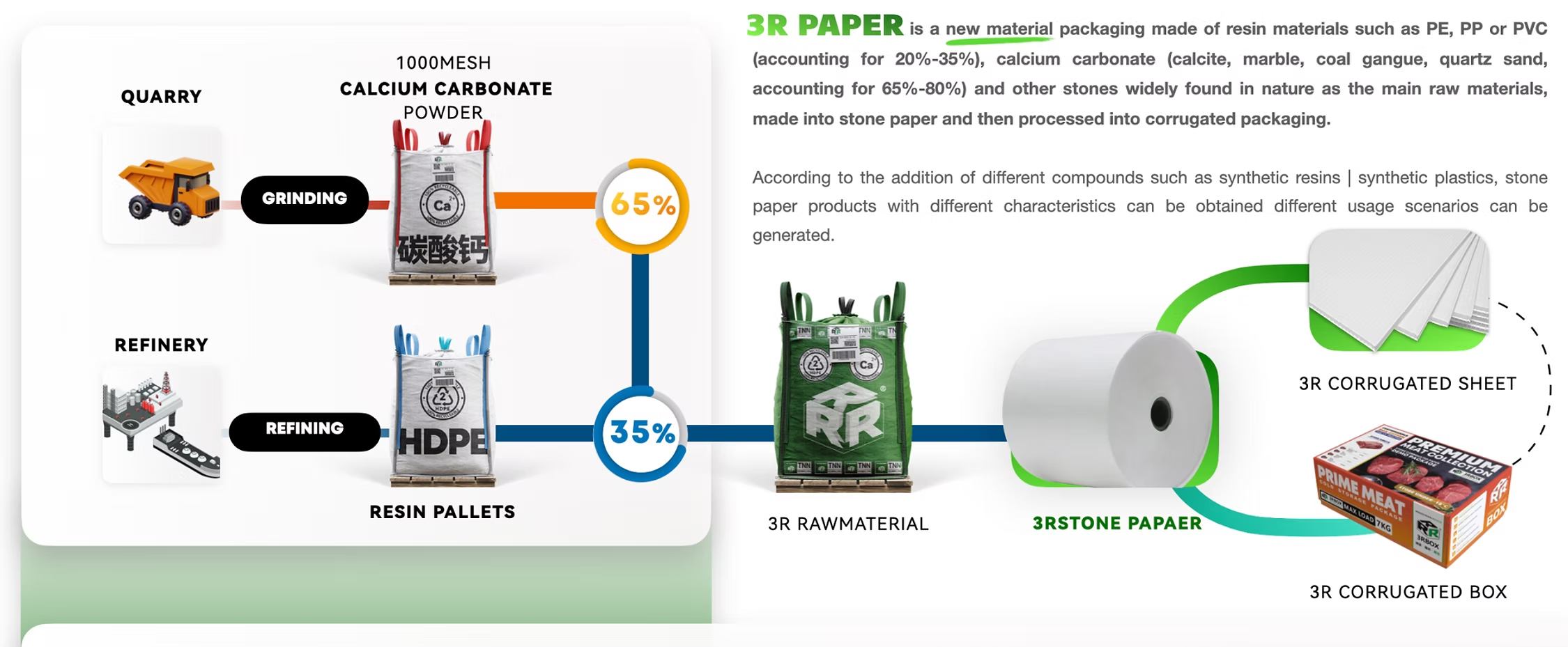
How Stone Paper Packaging is Made
The production process is different from traditional paper:
- Natural stone is crushed into ultra-fine powder
- Mixed with resin materials (PE / PP / PVC)
- Heated and extruded into flat sheets
- Sheets are stretched and formed into paper-like material
- Converted into packaging such as folding boxes or corrugated boxes
Depending on the resin type and formula, stone paper can be adjusted for different performance requirements such as flexibility, stiffness, or durability.
Key Features of Stone Paper Packaging
Stone paper is not just “eco-friendly paper”. It performs very differently in real logistics conditions.
1. Waterproof Performance
Stone paper does not absorb water like normal paper.
Even in wet or icy environments, it maintains its structure.
This is why it is widely used in seafood packaging and cold chain logistics, where melting ice and condensation are common problems.
2. Freezer Resistance (-60°C)
Stone paper packaging can withstand extremely low temperatures without cracking or breaking.
In frozen food logistics, this is a major advantage compared to traditional cardboard boxes, which often become weak or damaged under freezing conditions.
3. High-Quality Printing Surface
The surface of stone paper is smooth and dense, which allows:
- High-resolution printing
- Bright colors
- Strong branding presentation
For export products like seafood or fresh produce, packaging appearance directly affects brand perception.
4. Durable and Tear-Resistant
Stone paper has strong tensile strength. It is not easy to tear during handling, stacking, or transportation.
This reduces packaging failure during long-distance shipping.
5. Eco-Friendly Potential
Because it reduces dependence on wood pulp, stone paper helps:
- Reduce deforestation pressure
- Lower water usage in production
- Improve recyclability depending on formulation
Different compound ratios can also create different environmental performance levels depending on usage needs.
Where is Stone Paper Used?
Stone paper is widely used in industries that require moisture resistance, durability, and cold-chain performance, such as:
Seafood packaging
- Frozen fish
- Shrimp
- Shellfish export packaging
Cold chain logistics
- Frozen meat
- Ready-to-eat frozen meals
- Ice-packed transportation
Fresh produce packaging
- Fruits
- Vegetables
- Export agricultural products
In these industries, packaging failure often leads to direct product loss. That is why material performance matters more than just cost.
Why Stone Paper is Growing in Cold Chain Packaging
Traditional packaging materials like foam boxes or cardboard boxes have clear weaknesses:
- Foam is not environmentally friendly
- Cardboard absorbs water and collapses easily
- Plastic packaging often faces regulatory pressure in export markets
Stone paper packaging solves several of these issues at the same time:
- Waterproof
- Freezer-safe
- Printable for branding
- More stable in humid logistics environments
This combination is why more exporters are testing or switching to stone paper-based packaging solutions.
Final Thoughts
Stone paper is not just a “new material” trend. It is becoming a practical packaging solution for industries that need durability, moisture resistance, and cold-chain performance.
Especially in seafood and fresh food export markets, packaging is no longer just about protection—it is also about efficiency, branding, and sustainability.
Stone paper sits at the intersection of all three.
